Hakka Culture
Introduction
Hakka culture, characterized by its unique traditions, language, and architecture, has faced challenges due to economic migration and changing lifestyles. Originating as a subgroup of the Han ethnic group, the Hakka people moved from North China to regions like Fujian, Jiangxi, and Guangdong provinces during the late Eastern Jin Dynasty (317-420) and through the Tang Dynasty (618-907) and beyond. Over the centuries, they developed a distinct culture that includes a shared language, traditional music, and architectural marvels like the tulou.
Origins and Migration
The Hakka people are believed to have originated from the central plains of China, migrating southward due to social upheavals such as wars and natural disasters. Their migration history is a defining element of their cultural identity, as they settled in the mountainous regions of Southern China, particularly in Fujian, Jiangxi, and Guangdong provinces. These regions became the ancestral homes of the Hakka, where they maintained and developed their cultural practices.
Language and Cultural Transmission
Language plays a crucial role in the preservation and transmission of Hakka culture. The Hakka dialect, a branch of the Han language family, is considered an essential vehicle for cultural inheritance. However, the decline in the use of this dialect among younger generations is a significant concern for cultural preservation. Efforts are being made to revitalize the language through community programs and educational initiatives that encourage younger Hakka people to learn and use their ancestral tongue.
Architectural Heritage
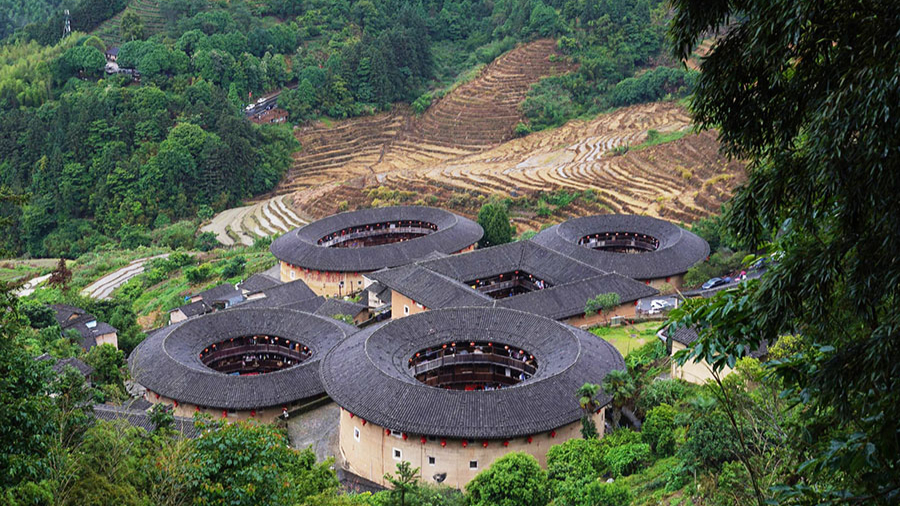
One of the most significant contributions of the Hakka people to cultural heritage is their unique architectural style, particularly the tulou. These earthen structures are large, fortified communal living spaces designed for defense and communal living. The Fujian Tulou, recognized by UNESCO as a World Heritage Site in 2008, exemplifies the Hakka's architectural ingenuity. These buildings are typically circular or rectangular, made from packed earth and timber, and can house multiple families. They are strategically constructed to harmonize with the surrounding landscape, balancing functionality with aesthetic appeal.
Intangible Cultural Heritage
Hakka culture extends beyond physical structures to encompass a rich tapestry of intangible cultural elements. Traditional Hakka music, including mountain songs and puppet shows, are integral parts of their cultural expression. These art forms are often performed at community gatherings and festivals, conveying stories and values passed down through generations. However, modernization and urbanization have put these practices at risk, as fewer individuals engage in or understand these cultural expressions.
Efforts in Cultural Preservation
Recognizing the threats to Hakka culture, various initiatives have been launched to preserve and promote it. Local governments, cultural organizations, and international bodies like UNESCO have emphasized the importance of protecting both tangible and intangible aspects of Hakka heritage. Efforts include cultural festivals, educational programs, and the recording and documentation of traditional practices. The Hakka Museum of China in Meizhou, Guangdong, serves as a vital center for the preservation and promotion of Hakka history and culture.
Global Hakka Community
Today, the Hakka diaspora spreads across the globe, with significant populations in regions like China's Taiwan and Hong Kong, as well as Southeast Asia and beyond. This global presence has led to a dynamic exchange of cultural practices and ideas, enriching the Hakka identity. Events such as the World Hakka Conference gather Hakka individuals from around the world, fostering a sense of unity and cultural pride.








